
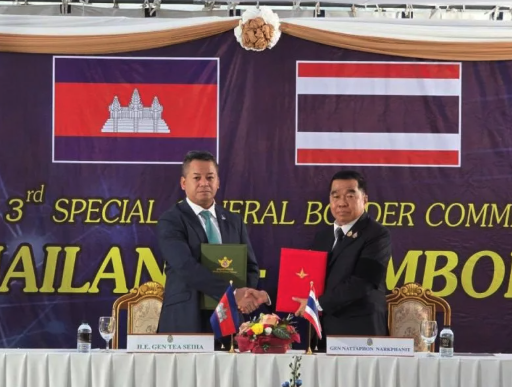
BANGKOK/PHNOM PENH – A fragile cease-fire between Thailand and Cambodia took effect at midday Saturday along their disputed border, bringing a tentative pause to nearly three weeks of fighting that has killed soldiers and civilians and driven close to one million people from their homes.
Under a joint statement issued by the two governments, their defense ministers agreed to freeze troop positions, prohibit reinforcements and facilitate the return of civilians to border areas as quickly as conditions allow. If the truce holds for 72 hours, Thailand will release 18 Cambodian soldiers captured since July, the statement said.
The agreement follows days of quiet diplomacy, encouraged by China and the United States, after an earlier cease-fire collapsed amid renewed clashes and mutual accusations.
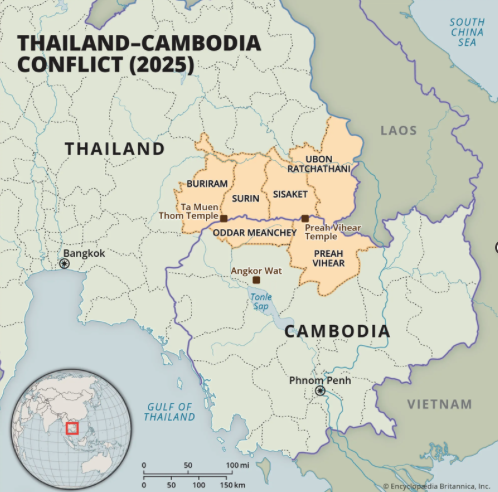
A Cautious Step Toward De-escalation
Thailand’s defense minister, Natthaphon Narkphanit, described the cease-fire as a test of trust, warning that Bangkok would reserve the right to defend itself if the agreement were violated. “Thailand retains its legitimate right to self-defense under international law,” he said, reflecting lingering skepticism in Bangkok after a previous truce unraveled.
Cambodia has not publicly questioned the terms, but officials there have emphasized the urgency of ending air strikes and allowing displaced families to return. The agreement also includes provisions for landmine clearance, a sensitive issue after Thai soldiers were injured by mines in November, prompting Thailand to suspend the earlier truce.
International Reactions and Diplomatic Pressure
International responses were swift but measured. The United Nations’ human rights chief, Volker Türk, said he hoped the cease-fire would “pave the way for peace,” while a European Union spokesperson urged both sides to implement the deal in good faith.
Washington played a quieter role this time. Unlike the October agreement brokered with the visible involvement of Donald Trump, the current truce did not feature high-profile presidential engagement, though the U.S. State Department confirmed it had supported diplomatic efforts behind the scenes. China, which has cultivated close ties with both governments, also encouraged restraint, according to regional diplomats.
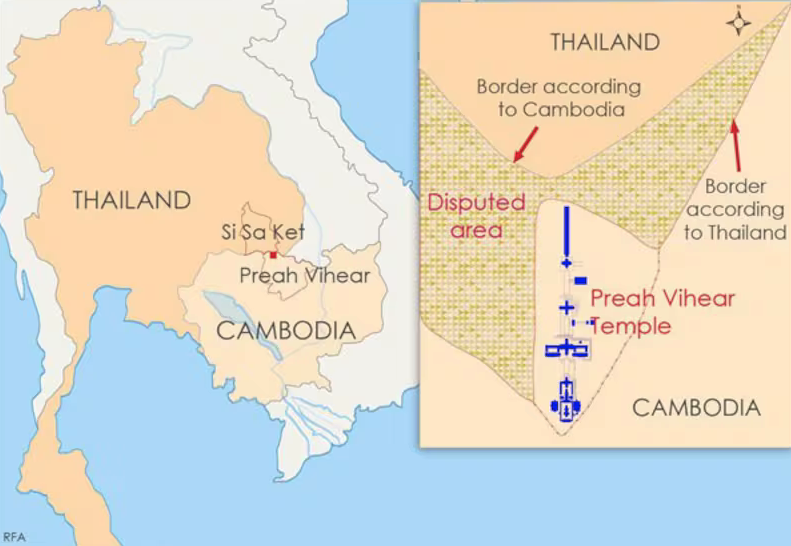
A Conflict Rooted in History and Nationalism
The latest violence is the most serious flare-up in years over a border dispute that dates back more than a century. Tensions rose sharply earlier this year after a symbolic incident at a contested temple site, followed by a deadly clash in May and five days of intense fighting in July that left dozens dead and thousands displaced.
Since then, sporadic fighting has continued, including Thai air strikes inside Cambodia as recently as Friday. Thailand said it targeted fortified military positions after civilians had evacuated; Cambodia accused Bangkok of indiscriminate attacks on civilian homes.
Cambodia has suffered heavier losses in personnel and equipment and has been pushed back from some border positions, grievances that analysts say could complicate efforts to turn the cease-fire into a lasting peace. Nationalist sentiment, inflamed on both sides, remains a volatile factor.
An Uncertain Peace
Whether the cease-fire endures will depend largely on political will and the credibility of enforcement mechanisms. A previous agreement, known as the Kuala Lumpur Peace Accords, collapsed after accusations of violations and rising casualties.
For now, the guns have fallen silent. For hundreds of thousands of displaced civilians, the agreement offers a narrow but vital hope of returning home — and a reminder of how fragile peace remains along one of Southeast Asia’s most enduring fault lines. (hb)
