
MANILA — The Philippines on Tuesday denounced what it called “dangerous” and “inhumane” actions by Chinese maritime forces against Filipino fishermen near Sabina Shoal, a contested feature in the South China Sea, after Manila said three civilians were injured and two fishing boats were damaged in a confrontation at sea.
Philippine Account of the Confrontation
According to the Philippine Coast Guard, Chinese vessels used high-pressure water cannons and aggressive blocking maneuvers against a cluster of Filipino fishing boats, and cut anchor lines—an act Manila said put crews at risk in rough conditions. The Defense Secretary, Gilberto Teodoro, said the episode violated basic duties to protect human life at sea, while the foreign ministry filed a formal diplomatic protest with China’s embassy.
China Rejects the Allegations
China rejected the accusations, saying the Philippines had distorted the facts and that its coast guard acted “reasonable[ly]” and “lawful[ly]” to defend what Beijing describes as its territorial sovereignty. Chinese officials signaled further “strong and effective measures” against what they cast as provocations, underscoring how quickly routine fishing activity can become a strategic flash point.
A Longstanding Maritime Dispute
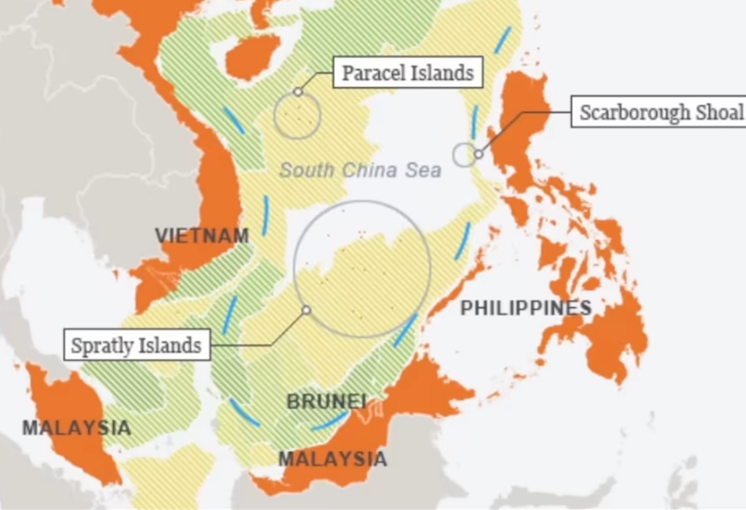
The clash adds to an already persistent cycle of maritime brinkmanship between the two countries in waters Beijing claims broadly—claims an international tribunal in 2016 found had no legal basis, a ruling China has continued to dismiss. Sabina Shoal lies within the Philippines’ exclusive economic zone, about 150 kilometers west of Palawan, Manila says.
International Reactions and Diplomatic Fallout
International responses were swift. The European Union condemned the reported use of water cannons and the cutting of anchor lines, calling the actions dangerous and a threat to safety at sea, while the United States issued a statement condemning the incident and urging adherence to international law—another sign that what happens around small reefs can carry outsized diplomatic weight. Australia also said it was “seriously concerned,” aligning with a growing chorus of partners backing Manila’s right to operate in its maritime zones.
Implications for Business and Trade
Even absent formal escalation, the economic spillover can be immediate. Repeated confrontations can darken investor sentiment toward exposed sectors, raise marine insurance costs and premiums, and complicate maritime operations and trade planning—particularly for routes and suppliers tied to the South China Sea’s busy corridors.
Travel and Perception Risks
For the travel industry, the risk is often reputational before it is operational: security headlines can shape destination perception, prompt corporate duty-of-care reviews, and dampen coastal and sea-adjacent tourism—especially in provinces closest to disputed waters and in adventure or marine segments that rely on confidence in local conditions. (zai)
Map: CSIS