
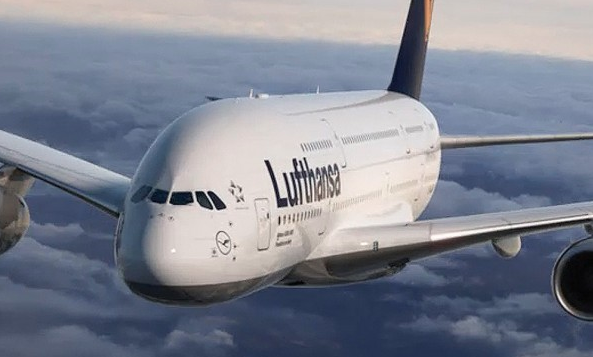
FRANKFURT – The Lufthansa Group said in January 2026 that it would begin equipping roughly 850 aircraft across its airlines with Starlink satellite internet, a sweeping retrofit that would make it Europe’s largest airline group to adopt the low-Earth-orbit system at scale. The first passenger flights with Starlink are expected as early as the second half of 2026, and the company says the conversion is intended to be completed by 2029.
The decision reflects a broader aviation push toward faster, more reliable connectivity — a shift that has accelerated as airlines compete to offer streaming-capable Wi-Fi and as Starlink’s footprint in aviation expands.
A Fleetwide Retrofit — Across Existing Planes and New Deliveries
Lufthansa Group said Starlink will be installed both on the current fleet and on new aircraft deliveries, part of what the company framed as a premium-experience investment tied to fleet modernization and onboard product upgrades.
The group’s passenger-airline portfolio includes Lufthansa Airlines, SWISS, Austrian Airlines, Brussels Airlines, ITA Airways and Eurowings, among others — and the company said the Starlink program is designed to cover “all fleets across all airlines.”
A senior executive, Dieter Vranckx, Lufthansa Group’s chief commercial officer, called the move an “essential milestone” for the customer experience, saying the group was investing both “in the best product on the market” and in passenger satisfaction.
Free Access, With Conditions
Lufthansa Group said the service is intended to enable higher-bandwidth uses such as streaming and cloud-based work— and that it will be free of charge for status customers and passengers who log in using a Travel ID, across all travel classes.
Domestic and International Reactions: Politics in Germany, Skepticism Elsewhere
In Germany, the choice of a Musk-linked provider drew criticism from some in the country’s co-ruling Social Democrats, who argued Lufthansa should have favored a domestic operator such as Deutsche Telekom.
Internationally, the announcement landed amid an increasingly public debate about the tradeoffs of Starlink hardware on aircraft. Ryanair, for instance, has ruled out adopting Starlink, telling Reuters it would impose a fuel-cost penalty because of added drag and weight — a claim that sparked a fresh round of argument involving Elon Musk and Ryanair’s chief executive.
Which Lufthansa Group Airlines Will Get Starlink First — and on What Routes?
What’s confirmed (so far):
- Group-wide: Lufthansa Group says only that the gradual introduction begins in the second half of 2026, and that more details will be announced “in the course of the year.” It has not publicly specified a first airline, first aircraft type, or first routes at the group level.
- Brussels Airlines: Brussels Airlines’ own press release provides the clearest sequencing: it says a first number of Airbus A320 aircraft will receive the modifications first, and the long-haul fleet will follow in a second phase — but it does not name specific routes.
Bottom line: As of now, the only explicitly stated “first” is Brussels Airlines starting with part of its A320 short-/medium-haul fleet; specific routes have not been publicly identified by Lufthansa Group or Brussels Airlines. (zai)
Photo: Lufthansa