
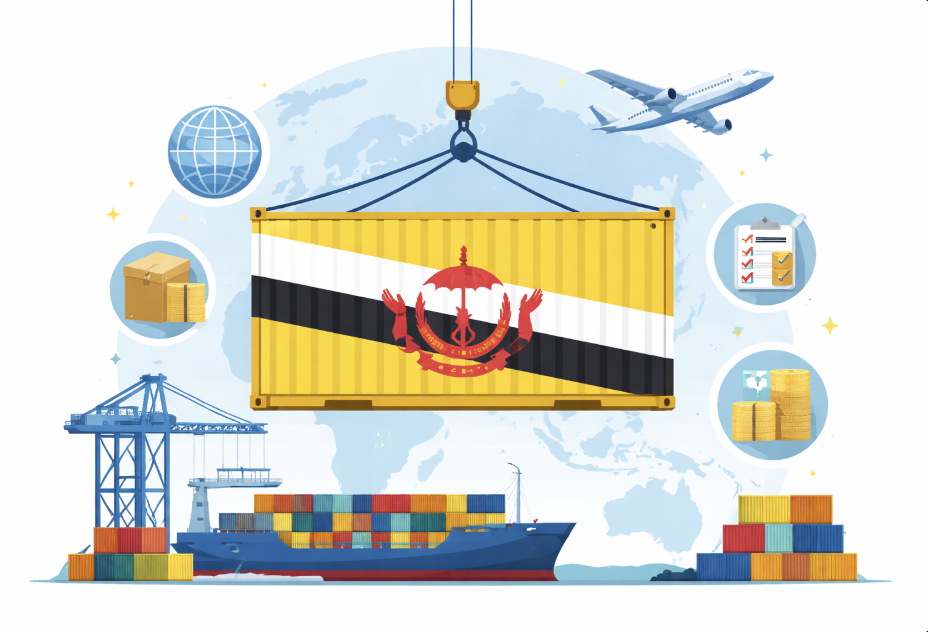
BANDAR SERI BEGAWAN, Brunei — For decades, Brunei Darussalam has been one of Southeast Asia’s wealthiest nations per capita, buoyed by abundant oil and natural gas reserves. But as global energy markets evolve and regional competition intensifies, the small sultanate is confronting a strategic question: how to sustain prosperity in a world gradually moving beyond hydrocarbons.
Brunei’s answer is an ambitious diversification drive under its national development blueprint, Wawasan Brunei 2035, a long-term strategy aimed at building a “dynamic and sustainable economy” less dependent on fossil fuels.
Despite these ambitions, the country’s economic structure remains deeply tied to energy. Oil and gas still account for roughly half of gross domestic product and a large share of government revenue, leaving public finances sensitive to fluctuations in global prices and declining production levels.
Oil Wealth Meets Structural Limits
The hydrocarbon sector’s dominance has long provided Brunei with high living standards and significant fiscal reserves, enabling the government to fund generous welfare programs and maintain one of the region’s highest GDP per capita levels.
Yet economists warn that reliance on energy exports carries risks. Production from aging oil fields is gradually declining, while the global transition toward cleaner energy threatens long-term demand for fossil fuels.
Brunei’s leadership has responded by expanding downstream petrochemical investments while simultaneously encouraging growth in non-oil sectors such as tourism, halal manufacturing and services. These sectors are among the government’s priority industries for attracting foreign investment and creating employment opportunities.
“Diversification is not optional,” one regional economic analysis noted, pointing to the vulnerability of oil-dependent economies to price volatility and technological change.
Building a Halal and Tourism Economy
Among the most visible pillars of Brunei’s diversification strategy is the halal economy, where officials believe the country has a natural competitive advantage.
With its strong Islamic regulatory framework and internationally recognized halal certification standards, Brunei is positioning itself as a hub for halal food processing, logistics and branding. Analysts say expanding the halal industry could help reduce reliance on hydrocarbons while connecting the country more deeply to the global Muslim consumer market.
Tourism is another priority. Under Wawasan Brunei 2035, the sector has been identified as one of the country’s key diversification industries, alongside technology and business services.
Officials are promoting eco-tourism, cultural tourism and regional travel packages with neighboring countries in the Association of Southeast Asian Nations (ASEAN). The strategy aims to integrate Brunei more closely into Southeast Asia’s expanding tourism circuits while generating employment for younger workers entering the labor market.
Regional Integration Gains Urgency
Brunei’s domestic reforms are unfolding against a rapidly evolving regional landscape. ASEAN — which includes major economies such as Indonesia, Malaysia and Singapore — is seeking deeper economic integration to strengthen supply chains and maintain trade competitiveness amid geopolitical tensions.
In 2025, ASEAN leaders endorsed a new strategic plan designed to harmonize trade standards, improve connectivity and attract investment, with the goal of becoming the world’s fourth-largest economic bloc by 2045.
For Brunei, deeper regional cooperation offers both opportunities and challenges.
The country’s small domestic market and limited workforce mean it must rely heavily on regional trade and foreign investment to expand its non-oil sectors. Analysts say integration with ASEAN supply chains could help Brunei develop industries such as logistics, food processing and advanced services.
Competing With Larger Neighbors
At the same time, Brunei faces stiff competition from larger ASEAN economies that have moved faster in industrial diversification.
Singapore, the region’s financial and technology hub, has built a sophisticated economy based on advanced manufacturing, finance and digital services. The city-state is also investing heavily in new energy infrastructure and cross-border electricity imports as demand from data centers and advanced industries grows.
Malaysia, meanwhile, has leveraged its manufacturing base and energy exports to become a major regional trading economy, particularly in electronics and petrochemicals.
And Indonesia, Southeast Asia’s largest economy, has emerged as a regional powerhouse in resource processing and manufacturing, seeking to move up global value chains through policies that promote domestic industrial development.
These countries dominate regional economic influence, with Indonesia, Singapore and Malaysia widely viewed as the leading economic powers in ASEAN.
By comparison, Brunei’s economy remains relatively small and concentrated, underscoring the urgency of diversification.
A Critical Decade Ahead
Economists say the coming decade will be decisive for Brunei’s economic transformation. While diversification policies have gradually expanded the non-oil sector — particularly in services and telecommunications — structural challenges remain, including a small domestic market and limited private-sector dynamism.
The government has nonetheless emphasized that diversification and regional integration will remain central policy priorities as global economic uncertainty grows.
For the oil-rich sultanate, the path forward lies in balancing two realities: leveraging its energy wealth while building a more resilient and diversified economy capable of competing in a rapidly changing Southeast Asian region.
If successful, Brunei could transform its reputation from a hydrocarbon-dependent state into a specialized economic hub within ASEAN — one built on halal industries, tourism and regional trade connectivity rather than oil alone.