Tag Archives: Ho Chi Minh City

Vietnam: Attractive location for German investment

HANOI – Vietnam has emerged as an increasingly attractive location for German investment. Key factors contributing to this trend include a competitive and skilled labor force, a liberalized investment climate, and a steadily expanding domestic market. This overview outlines the current investment landscape and provides insights into the presence and development of German manufacturing operations in Vietnam.

OVERALL INVESTMENT STATUS

Historical Overview

German companies began investing in Vietnam shortly after the country opened its economy to foreign participation. In 1992, Bültel—known for producing fashion for brands such as Camel Active—established operations in Binh Duong. That same year, outdoor brand Tatonka launched a backpack production line in Ho Chi Minh City (HCMC). German investment activity accelerated following Vietnam’s accession to the World Trade Organization in 2007 and gained further momentum with the 2015 revision of the Enterprise and Investment Law. As of today, 576 German companies have invested a cumulative adjusted total of 3.7 billion USD in Vietnam. These investments have contributed to the creation of at least 50,000 jobs across the country.
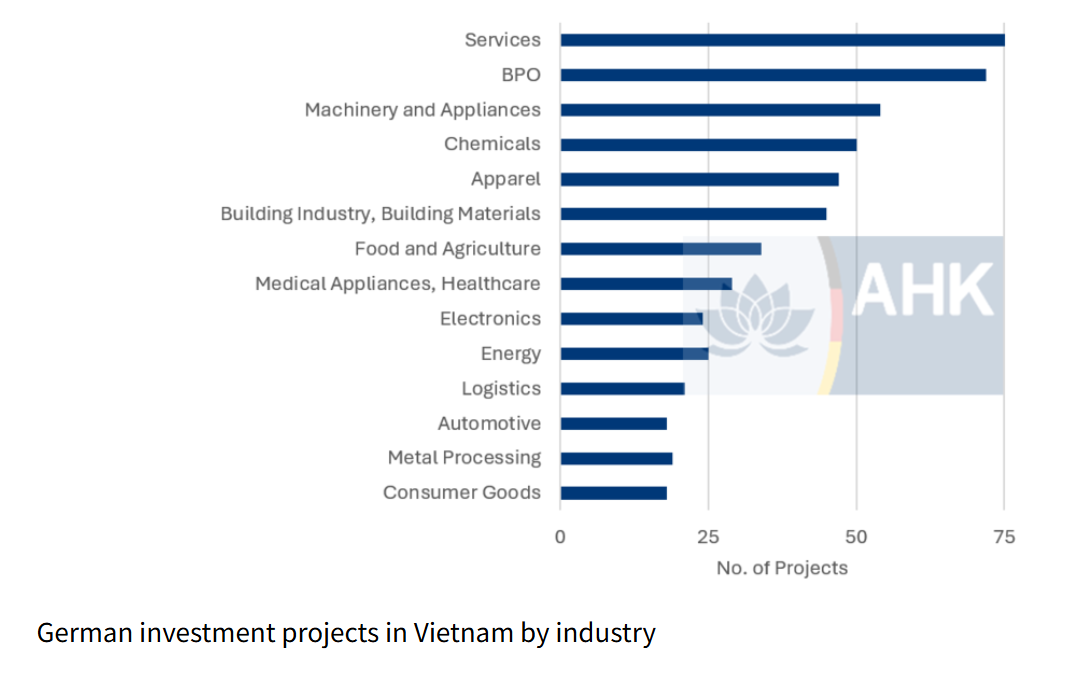
Germany is widely recognized as an industrial leader, particularly in high-quality and high-tech manufacturing. However, contrary to common perception, the majority of German investments in Vietnam originate from the service sector rather than manufacturing.

Nearly half of the investment projects in Vietnam are concentrated in the service sector. These include branches such as consulting, business process outsourcing/IT outsourcing (BPO), and logistics. Given the substantial bilateral trade volume (ranging between 16 and 18 billion USD annually) there is also significant investment from German companies involved in the trade of machinery, chemicals, and food products. These sectors benefit from Vietnam’s strategic location and growing infrastructure.

In terms of operational focus, most German companies in Vietnam concentrate on sales and aftermarket services. A notable example is Zott, which markets its products (including the popular “Monte” pudding) with a workforce of over 750 employees in Vietnam. Currently, 117 German companies operate manufacturing facilities in the country. Messer stands out as the largest single manufacturing investment, with further details provided below.

usiness process outsourcing and IT offshoring/outsourcing (here referred to as “BPO”) have emerged as increasingly attractive avenues for German investors. The sector benefits from competitive labor costs paired with a highly qualified workforce, making Vietnam a compelling destination for such operations. To date, 71 companies have been established in this field, with activities concentrated in software development and post-processing services. The largest employer within business process outsourcing is Digi-Texx, which operates primarily out of HCMC and employs over 1,500 staff. Bosch has employed 4,000 employees in its IT and engineering division.

Investment Destinations and Sources

The most important investment destination by far is HCMC. Over half of all German companies in Vietnam have been established here. When taking a look solely at sales/service functions, 75% are located in HCMC. This makes sense because the greater HCMC area contributes over 40% of Vietnam’s GDP. It therefore has to be considered the most important market and the first point of entry into the country. Hanoi comes in as a distant second while Ho Chi Minh City and Dong Nai are first and foremost attractive locations for manufacturing operations.
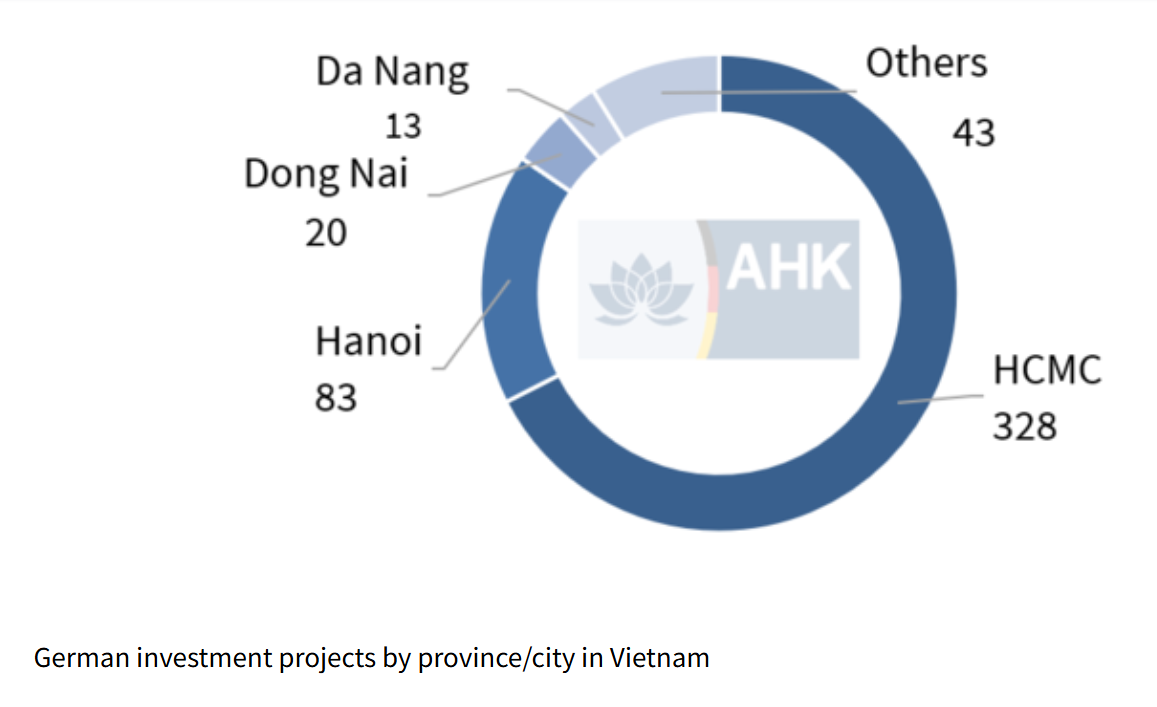
Although Germany comprises 16 federal states, more than half of the investments in Vietnam originate from companies headquartered in just three: Baden-Württemberg, North Rhine-Westphalia, and Bavaria. These states are not only the most populous but also serve as Germany’s key industrial hubs. Given their economic weight, this concentration of outbound investment is to be expected.
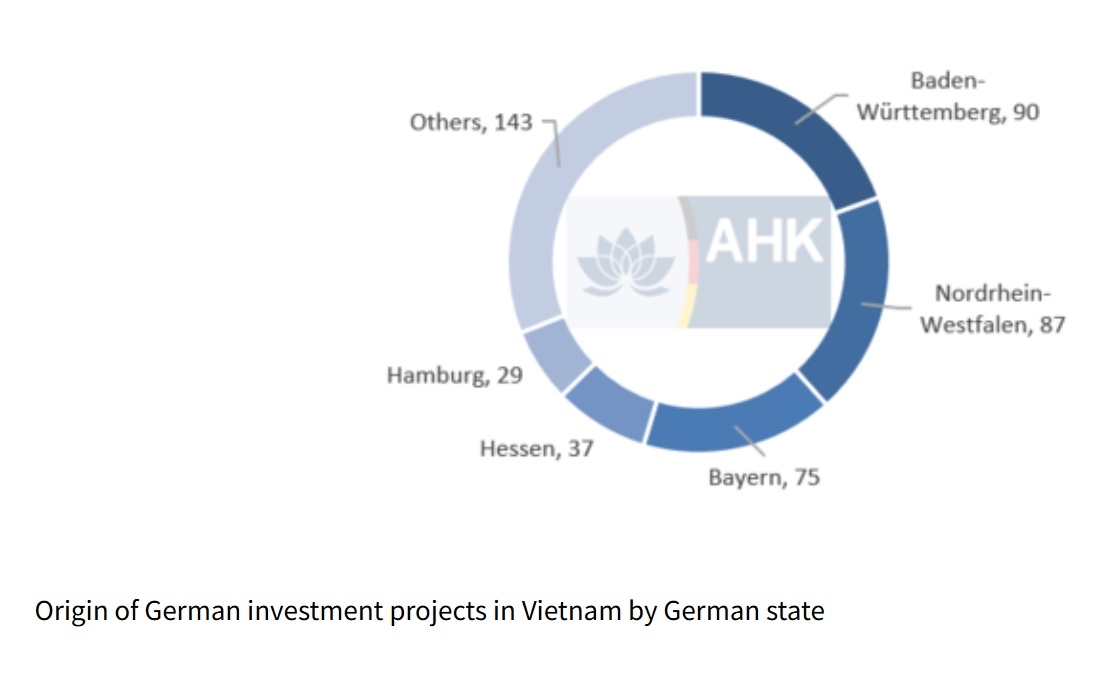
Germany ranks among the most active European investors in Vietnam, with its companies making significant contributions to the country’s socio-economic development.

  • German enterprises are widely regarded as attractive employers and are committed to workforce development. This is reflected in their support for dual vocational training programs and partnerships with local universities.
  • By introducing global standards, German companies help raise the bar in Vietnam—implementing cutting-edge technologies, promoting environmental sustainability, and adhering to the highest levels of compliance.
  • Wherever feasible, German firms collaborate with local suppliers, thereby facilitating the transfer of managerial and technological expertise into the Vietnamese economy.

Moreover, German investors typically pursue long-term commitments. Once established, they tend to remain engaged and demonstrate strong interest in the development of local communities.

MANUFACTURING INVESTMENTS

Overview

Currently, 117 manufacturing sites operated by German companies are located across Vietnam.

  • As illustrated below, the majority of these facilities are active in the apparel sector. Germany has a longstanding tradition in textile manufacturing, with regions such as greater Reutlingen renowned for their successful textile suppliers and original equipment manufacturers (OEMs), including Hugo Boss and Trigema. Both types of players, OEMs and suppliers, are now present in Vietnam.
  • In addition, many chemical companies have invested in the country. Unlike other industries that primarily use Vietnam as an export-oriented manufacturing base, chemical enterprises tend to serve local customers. Among them, family-owned Messer Gases stands out as the largest player.
  • Vietnam has yet to emerge as a major automotive manufacturing hub. As a result, German companies have not developed a broad supplier network in this sector. Nevertheless, firms such as Schaeffler, Bosch, and Dräxlmaier represent some of the most substantial German investments in Vietnam’s automotive industry.

The largest German manufacturing investments in Vietnam have been made by Bosch (automotive), Stada – Pymepharco (pharmaceuticals), and Messer Gases (chemicals). Bosch operates a major production complex for pushbelts in Dong Nai and maintains research and development centers in HCMC and Hanoi. Stada – Pymepharco manufactures pharmaceuticals at its facility in Phu Yen province, located in south-central Vietnam. Messer Gases supplies industrial gases to domestic clients such as Hoa Phat, with its primary production hubs located in Haiphong (northern Vietnam) and Quang Ngai (central Vietnam).

Most German manufacturing operations in Vietnam are concentrated in the southern region, particularly in Dong Nai and HCMC. In the north, the capital Hanoi and its port city Haiphong serve as the key investment destinations. In central Vietnam, Da Nang is emerging as a promising location for foreign investment. This province offers low land and labor costs, combined with excellent living conditions, making it increasingly attractive for long-term industrial development.

Investments in northern Vietnam concentrate on the economic corridor between Hanoi and Haiphong. B.Braun and Messer are some of the oldest and biggest investments here. Latest additions have been Harting (electronics supply) as well as RRC (batteries) and Certoplast (adhesives) in Haiphong.

German investments in central Vietnam are primarily located in the provinces of Gia Lai and Dak Lak, as well as in the greater Da Nang region. The Da Nang area, in particular, offers a compelling mix of relatively low land prices and competitive labor costs, making it an increasingly attractive destination for foreign investors. Recent additions to the region include Kärcher (cleaning equipment), Lecka (nutritional snacks), and OBE (eyewear components) in Quang Nam, as well as Leonhard Kurz (automotive supplies) in Gia Lai.

The vast majority of German manufacturing investments in Vietnam are concentrated within a 30 to 40-kilometer radius of HCMC’s central business district. This region has long served as the traditional epicenter of foreign direct investment in the country. It hosts some of the earliest German ventures, such as Bültel and Batonka/Mountech, alongside major industrial complexes operated by companies like Bosch and Schaeffler. The area is notably diverse: HCMC functions as the administrative and economic core, Dong Nai is home to well-established manufacturing hubs, and Tay Ninh is emerging as a promising destination for new investments.

Drivers for Manufacturing Investments

A key driver behind recent German manufacturing investments in Vietnam has been the adoption of “China Plus One” strategies. This approach reflects a growing trend among companies with existing operations in China to diversify their production footprint in response to various challenges in the Chinese market. Vietnam presents a compelling alternative, offering labor costs at roughly one-third of China’s, a liberal and welcoming investment environment (with most sectors open to wholly foreign-owned enterprises (WFOEs) and a business culture that shares many similarities with China due to geographic and cultural proximity. While companies generally maintain their existing manufacturing operations in China, given their continued satisfaction with performance and the market’s strategic importance, new capacity expansions are increasingly being directed toward Vietnam. This shift allows German investors to broaden their presence in Asia and mitigate country-specific risks through geographic diversification.

Looking for Support in Manufacturing Investments?

A significant share of new German manufacturing plants in Vietnam is established with support from specialized advisory services by AHK Vietnam. These investors benefit from tailored assistance in identifying and securing suitable locations, as well as accessing relevant investment information. The location analysis team of AHK Vietnam is facilitating this process with a strong network to local industrial zones and service providers, ensuring efficient and informed site selection. For companies considering an investment in Vietnam, this support can be a valuable resource. (AHK)

Further information is available at: https://vietnam.ahk.de/en/services/investment-location-analysis
Vietnam: German Businesses Show Resilience

HO CHI MINH CITY – The global economy continues to experience sluggish yet stable growth, characterized by ongoing challenges and uncertainties. Amid these conditions, German businesses remain optimistic about the Vietnamese market. The AHK World Business Outlook Fall 2024 survey highlights German investors’ confidence in their business performance and Vietnam’s robust macroeconomic growth, underscoring the country’s appeal as a key investment destination.

Economic Growth Expectations

According to those results, 81% of surveyed businesses are positive as well as satisfied with their current operations, 50% expect business growth, 35% plan to increase local investments, showing an increase compared to spring 2024 (24%), and 35% anticipate economic growth in Vietnam over the next 12 months, while 54% are confident about Vietnam’s steady pace. Besides, 54% of respondents intend to maintain their workforce levels in the next 12 months while 35% plan to hire new employees.

In 2024, German investment in Vietnam reached new heights, reflecting a strong and growing partnership between the two nations. With over 530 German companies actively operating in Vietnam, the country remains a key market for Germany’s global expansion strategies. German enterprises have invested an impressive $3.6 billion, showcasing their confidence in Vietnam’s economic potential. These investments span diverse sectors, including manufacturing, advanced technology, logistics, and the rapidly growing renewable energy industry, underscoring Vietnam’s pivotal role in supporting sustainable and innovative growth.

Risks and Challenges

In Europe, the economic outlook is underwhelming. Although German companies operating internationally remain optimistic about the future, they still remain cautious due to these global economic fluctuations.

These businesses have identified several key challenges stemming from this volatile environment. Chief among these are subdued global demand (60%), economic policy uncertainties (30%), and infrastructure constraints (27%). Other pressing issues include trade barriers (24%), increasing labor costs (22%), legal uncertainties (22%), and ongoing supply chain disruptions (22%), all of which influence the strategic priorities of German enterprises, including those in Vietnam.

Additionally, German companies are defining factors influencing their competitiveness in the Vietnamese market. The highest influences include the rising cost of preliminary products (47%), intense local competition (33%), and competition from third-market players (26%). These factors further underscore the complex landscape that businesses must navigate to sustain growth and remain competitive globally.

Opportunities

Despite challenges, German businesses see significant growth potential in Vietnam’s promising market. Over half (53%) of surveyed firms have noted a positive competitive position over the past five years. Vietnam’s steady economic growth and strategic role as a manufacturing and export hub offer German companies a stable alternative amid global uncertainties, enabling supply chain diversification and risk mitigation.

The country’s focus on renewable energy and sustainability aligns with Germany’s strengths in green technologies, presenting vast opportunities for innovation and collaboration. A strong and growing German business community in Vietnam further underscores the potential for partnerships and joint ventures. By addressing challenges like infrastructure gaps and local competition, German firms can strengthen their presence in Vietnam and leverage their dynamic economic landscape to achieve sustainable growth.

Source: AHK Vietnam, Photo: VietnamNet


Vietnam Sees Record Tourist Arrivals in 2024

HANOI – Vietnam has set a new benchmark in its tourism industry, reporting record tourist arrivals in 2024. Southeast Asian countries have welcomed millions of visitors from around the globe, making tourism one of the key drivers of economic growth. This surge in international travel is a testament to Vietnam’s growing appeal as a top travel destination, fueled by targeted marketing, major investments in infrastructure, and the country’s unique blend of cultural heritage, natural beauty, and vibrant cities.

Key Factors Behind the Surge in Tourism

Several factors have contributed to Vietnam’s record tourism figures in 2024. First and foremost, the country’s government has made significant investments in both infrastructure and tourism marketing. Major cities like Hanoi, Ho Chi Minh City, and Da Nang have seen substantial upgrades in transportation networks, including expanded airports, improved highways, and new rail links. These developments have not only made it easier for tourists to travel within the country but have also increased Vietnam’s connectivity to international markets.

In addition to infrastructure, the government has launched a series of high-profile marketing campaigns aimed at promoting Vietnam as a year-round tourist destination. Leveraging the country’s natural beauty, historical sites, and cultural landmarks, the campaigns have been successful in attracting visitors from a diverse range of countries, particularly from China, South Korea, Japan, and the United States.

Furthermore, the easing of post-pandemic travel restrictions has led to a strong rebound in international tourism. Vietnam has also benefited from the growing trend of “revenge travel,” as travelers seek out new and exotic destinations after years of lockdowns and restrictions.

Regions and Cities Leading the Boom

While the entire country has experienced tourism growth, some regions and cities are seeing the most significant benefits from the boom.

Hanoi: As the capital city, Hanoi continues to be a central hub for international visitors, drawn by its rich cultural heritage, ancient architecture, and proximity to UNESCO World Heritage sites like Ha Long Bay. Hanoi’s Old Quarter, known for its narrow streets, French colonial buildings, and street food, remains a top attraction for tourists seeking an authentic Vietnamese experience.


Halong Bay

Ho Chi Minh City (Saigon): The commercial and financial capital of Vietnam, Ho Chi Minh City, has seen a notable increase in tourists, particularly business travelers and those interested in Vietnam’s vibrant nightlife and modern urban attractions. The city’s growing array of luxury hotels, shopping malls, and cultural venues have made it a key destination for both leisure and business tourism.

Da Nang: Situated along Vietnam’s central coast, Da Nang has rapidly emerged as a favorite destination for both domestic and international tourists. Known for its scenic beaches, luxury resorts, and proximity to historical landmarks such as the ancient town of Hoi An and the imperial city of Hue, Da Nang has capitalized on the growing trend of coastal tourism.

Phu Quoc Island: Vietnam’s premier island resort destination, Phu Quoc, has experienced a massive influx of visitors in 2024, thanks to new international flights and high-end resorts that have made the island a hotspot for both luxury and eco-tourism. Its pristine beaches, coral reefs, and rich biodiversity attract nature lovers and travelers seeking a more laid-back vacation.

Sapa and the Northern Highlands: Sapa, known for its stunning terraced rice fields and ethnic minority cultures, has also seen a rise in tourist arrivals. With the growing demand for sustainable and adventure tourism, the northern highlands are becoming increasingly popular among trekkers and eco-tourists. Visitors are drawn to Sapa’s dramatic landscapes and the opportunity to engage with local indigenous cultures.

Economic Impact and Future Outlook

The tourism boom has had a substantial impact on Vietnam’s economy, generating jobs, supporting local businesses, and contributing to overall GDP growth. In 2024, tourism has been estimated to account for a significant portion of the country’s economic output, with many local industries, from hospitality to transportation, seeing a surge in demand.

However, the rapid growth of tourism also presents challenges. There are concerns about over-tourism in certain areas, particularly in destinations like Ha Long Bay and Phu Quoc, where environmental sustainability could be at risk. The government is working to address these issues by implementing measures to promote sustainable tourism practices, including stricter regulations on visitor numbers and environmental protection.

Looking ahead, Vietnam’s tourism industry is poised for continued growth. With plans for further infrastructure upgrades, new cultural attractions, and an expanding international marketing presence, Vietnam is well-positioned to maintain its status as one of Asia’s most dynamic tourist destinations in the years to come. (hz)

FILM FESTIVAL: NONFLIX – LIMITED AND LESS…ASIA

BERLIN/HO CHI MINH CITY – NONFLIX is a three days film festival streaming on-line in Berlin and on-site in Hanoi and Ho Chi Minh City (HCMC). Emerged in the time of social isolation, the festival seeks another mode of connecting, exchanging and getting into conversation through a journey of moving images. With 17 films by 11 artists, we take a closer look on Asia as the main focus: a complex encyclopaedia of cultures, politics and societies which are triggers of the topics in the movies of our programme. The films are set up into two parts available online for 24 hours each, followed by the online discussion on the final day.

Bringing together selected films from artists Nguyễn Trinh Thi, Bernd Lützeler, Douglas Seok, Kay Abaño, and Philip Widmann in the first part of the screening, the viewer will be drawn into stories, images and sounds debating on aesthetics, ethics, memory, history, migration, globalism and colonialism. The second part switches focus from external to internal colonization and zooms in on domestic problems, racism, and intimacy and gender issues by showing films of Ratchapoom Boonbunchachoke, Popo Fan, Trương Minh Quý, Colin Huang, Vũ Thị Thu Hà, and Lu Yang. The online discussion “Pandemic Cinema” will carry out experiences about working processes and visions on the future of arts and movies.

ATF : HCMC celebrates 320 years anniversary

Ha Long City – The Ho Chi Minh City Department of Tourism organized the “Roadshow Ho Chi Minh City Tourism” at this year’s ASEAN Tourism Forum 2019 and TRAVEX Exhibition at Halong City, Quang Ninh Province.

The Roadshow Ho Chi Minh City Tourism had two main activities: (1) Promote Ho Chi Minh City “Safe – Attractive – Friendly” Destination, (2) “Saigon – Ho Chi Minh City Night” on 15th January 2019 with the participation of more than 150 international media, international travel professionals and Representative of National Tourism Organizations of ASEAN (3) Introducing and promoting Medical Tourism and 8 new City Tours to celebrate Ho Chi Minh City’s 320th anniversary.

“The International Arrivals to Ho Chi Minh City has reached about 7,5 million in 2018, increase 17,38% compared to 2017. The city has attracted 29 million domestic visitors, increase 16% compared to 2017. Total revenue of tourism in 2018 is 140,000 billion VND, up 21,55% over the same period. Organizing these activities is our enthusiastic effort to promote Ho Chi Minh City as a travel gateway & a gather place of Vietnam’s cultures and cuisines to international media and travel professionals.” said Mr Bui Ta Hoang Vu, Director of Ho Chi Minh City Department of Tourism. In addition, at TRAVEX Exhibition 2019, Ho Chi Minh City wants to introduce and promote Medical Tourism and 8 new City Tours which will provide unique and typical experience to explore the process of formation and development of Saigon – Gia Dinh – Ho Chi Minh City, enhance the image of an ancient and modern city.

In the framework of the ATF Vietnam 2019, Ho Chi Minh City Department of Tourism introduced “The 15th edition of International Travel Expo Ho Chi Minh City (ITE HCMC 2019)” to more than 150 international media, travel professionals, travel agencies at “The 49th Meeting of the ASEAN National Tourism Organizations”. The ITE HCMC 2019 will take place from 5-7 September 2019 at the Saigon Exhibition and Convention Center (SECC).

ITE HCMC 2019, under the theme “Travel Gateway to Asia, is the largest and most established international trade tourism expo in Vietnam, and is a key bridge in the tourism industry for both inbound and outbound markets in Vietnam and the region. The ITE HCMC 2019 marks the 15th anniversary of its establishment and development of ITE HCMC with double scale.

Mr Le Truong Hien Hoa, Director of Ho Chi Minh City Tourism Promotion Center (HTPC) announced the City’s Promotion Plan: (1) Attending annual international events such as: ASEAN Tourism Forum & TRAVEX Exhibition; Tourism promotion activities of the Asia-Pacific Tourism Promotion Organization (TPO) and the Lower Mekong Mayors Summit Tourism Meetings; (2) Attending International Tourism Expo and organizing Roadshows; (3) Joining through the city’s foreign affairs trip led by Leader of People’s Committee ; (4) Coordinating with the Investment and Trade Promotion Center (ITPC) for foreign promotion activities; and (5) Coordinating with Airlines, Travel agencies and International organizations to organize FAM trip and Press Trip.

Regarding foreign promotion, HTPC will focus on promoting markets in Europe, especially Germany, France, United Kingdom and North East Asia region such as China, Korea and Japan. During the first quarter of 2019, the Ho Chi Minh City Department of Tourism will organize the Roadshow Program in Germany and France in March 2019 and the Event ‘Ho Chi Minh City Day in Aichi/Japan in April 2019. In addition, the Ao Dai Festival and the 15th ITE HCMC will be the highlight of the City’s tourism event in 2019.

NEW CITY TOUR TO CELEBRATE 320TH ANNIVERSARY

To celebrate the 320th anniversary of the city, HCMC Tourism has launched eight tours aimed to give tourists an insight into the formation and development of HCM city.

City tours in the central areas include the Central Post Office, Notre-Dame Cathedral, Binh Tay Market, and the War Remnants Museum. While Can Gio District is famous for the Vam Sat Eco-Tourism Site and Rung Sac Military Base, the Cu Chi District is most known for its historical relic site of Cu Chi Tunnels. The price is for these tours range from VND 400,000 to VND 2,1 million (USD 17 to USD 90).

MEDICAL TOURISM

In 2017, Vietnam welcomed more than 80,000 foreigners for medical examination and treatment, in which, nearly 40,000 foreigners went to Ho Chi Minh City to experience medical tourism products. This alsone generated nearly 1 billion USD in revenue.

Beside the advantages of facilities, advanced medical qualifications, the cost for medical examination and treatment in Vietnam is only about 40% compared to other countries in the region. The Ho Chi Minh City Department of Tourism and Department of Health have collaborated to promote and introduce Medical Tourism to ASEAN countries, especially Laos and Cambodia.