
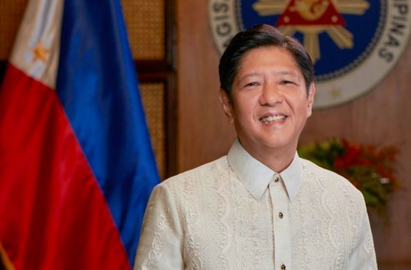
MANILA — President Ferdinand R. Marcos Jr. used a burst of diplomatic outreach to frame the Philippines’ ASEAN chairmanship for 2026 as both an opportunity and a warning: the region’s next year, he suggested, will depend on whether partners can strengthen cooperation without surrendering to coercion.
At Malacañang’s annual vin d’honneur — the New Year reception for ambassadors and senior officials — Mr. Marcos thanked the diplomatic corps and pointed to the Philippines’ coming leadership role in ASEAN as a reason to deepen collaboration. In a message posted afterward, he pledged continued commitment to “dialogue, cooperation and a rules-based international order,” describing the moment as one to build “stronger ties” among nations.
The rhetoric landed amid renewed maritime friction. The Philippine Star reported that Mr. Marcos’s remarks came as tensions “grip the West Philippine Sea,” including a Jan. 12 harassment incident involving a Philippine fishing boat near Panatag (Scarborough) Shoal, later detailed by the Philippine Coast Guard. The Coast Guard, the paper said, reiterated that it would defend fishermen’s safety and maritime rights consistent with UNCLOS and the 2016 arbitral award.
A chairmanship shaped by security — and by partners’ responses
Internationally, the Philippines’ chairmanship is already being read through the prism of great-power competition. A day before the palace reception, Japan and the Philippines signed new defense agreements aimed at improving military logistics and cooperation, with Japanese Foreign Minister Toshimitsu Motegi emphasizing the importance of Japan–Philippines–U.S. trilateral coordination in what he called a more severe strategic environment. Philippine Foreign Minister Theresa Lazaro described Japan as a “vital strategic partner,” and both sides stressed rule-of-law principles relevant to the South China Sea.
The agreements fit a broader pattern that analysts say will shadow Manila’s year in the ASEAN chair: the Philippines’ widening network of security ties, even as ASEAN’s consensus diplomacy often struggles to move quickly on territorial disputes. Chatham House, in a late-2025 assessment of the coming chairmanship, argued that tensions between China and the Philippines make a comprehensive South China Sea code-of-conduct outcome in 2026 unlikely, though it noted alternative avenues Manila could pursue to advance regional security goals.
What Manila says it wants to deliver
Philippine officials have packaged the 2026 chairmanship as a practical agenda rather than a slogan. In outreach to ASEAN diplomats in New Delhi, the Department of Foreign Affairs highlighted a “3P” framework — Peace and Security, Prosperity, and People Empowerment — to guide priorities under the chairmanship theme, “Navigating Our Future, Together.”
The domestic constraints
At home, the chairmanship arrives as Mr. Marcos faces political and economic headwinds that could complicate the kind of sustained diplomacy ASEAN leadership often requires. Fortune, in a Jan. 2026 analysis, described the Philippines as starting the year on a “weaker footing,” pointing to governance challenges and a difficult trade environment even as Manila sets ambitious regional goals.
Still, the message from Malacañang during the Jan. 16–17 outreach was unmistakable: the Philippines intends to use the ASEAN chair not only to convene meetings, but to press for tighter cooperation with partners — and to frame that cooperation in the language of rules, restraint and regional resilience. (zai)