
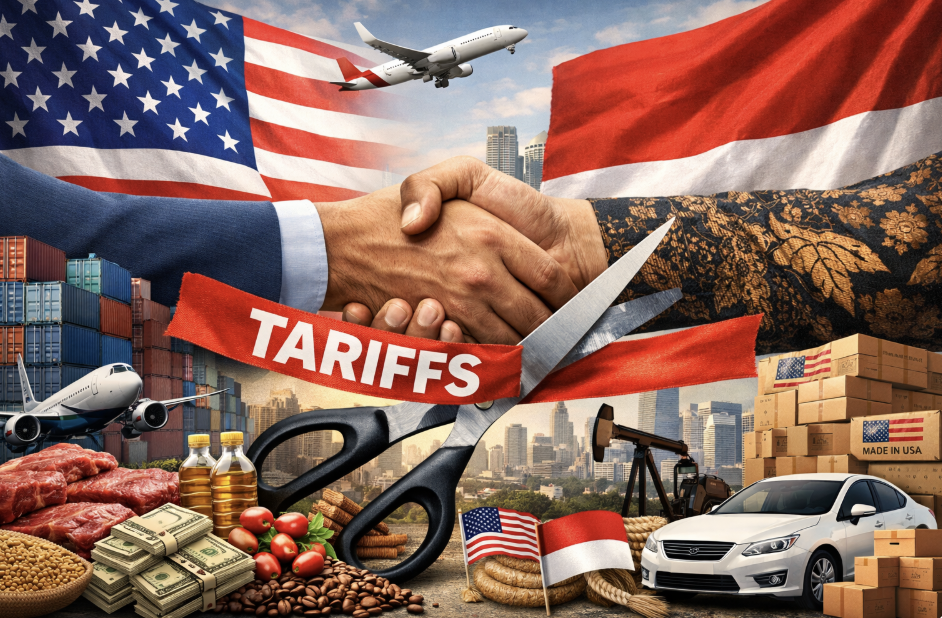
JAKARTA, Indonesia – The United States and Indonesia have finalized a sweeping trade agreement that will reduce American tariffs on Indonesian goods to 19 percent, down from a proposed 32 percent, while committing Southeast Asia’s largest economy to broad market-opening measures and more than $30 billion in purchases of U.S. products.
The White House announced Thursday that the deal would eliminate trade barriers on more than 99 percent of American exports to Indonesia. In return, Washington will grant tariff exemptions on select Indonesian products, including certain apparel and textiles made with U.S.-sourced cotton and synthetic materials.
“This agreement breaks down trade barriers and advances the interests of the American people,” said U.S. Trade Representative Jamieson Greer in a statement released by the administration.
The agreement was reached during President Prabowo Subianto’s visit to Washington, where he attended the inaugural meeting of President Trump’s newly formed “Board of Peace,” a forum focused on post-conflict reconstruction in Gaza.
Broad Market Access and Strategic Supply Chains
Indonesia’s coordinating minister for economic affairs, Airlangga Hartarto, described the deal as mutually beneficial, emphasizing that nearly 90 percent of Jakarta’s tariff-related requests were accepted by Washington.
“The vision of this agreement is mutual economic prosperity, strong supply chains and respect for each country’s sovereignty,” Airlangga told reporters in Washington.
Under the terms, Indonesia will secure tariff exemptions for more than 1,700 products, including coffee, spices, chocolate, natural rubber and palm oil — its top export commodity. At the same time, Jakarta has agreed to recognize U.S. regulatory standards in sectors such as automotive safety and emissions, medical devices and pharmaceuticals.
The White House said Indonesia would lift or reduce trade barriers affecting American agriculture, seafood, health care products, technology and automotive goods. The country has also committed to purchasing billions of dollars’ worth of U.S. exports, including soybeans, beef, cotton, energy products and Boeing aircraft.
In a provision reflecting Washington’s strategic priorities, Indonesia will facilitate U.S. participation in developing its rare earths and critical minerals infrastructure, a move seen as part of a broader American effort to diversify supply chains away from China.
The agreement is scheduled to take effect within 90 days, with both sides retaining the option to revise certain terms by mutual consent.
Investment Surge and Trade Balance Concerns
On Wednesday, Indonesian and American companies signed commercial agreements valued at $38.4 billion, spanning mining, technology, textiles and other sectors. Indonesian officials said the partnerships were negotiated alongside the tariff framework and would help reduce Indonesia’s trade surplus with the United States — a longstanding concern of the Trump administration.
Speaking at a dinner hosted by the U.S. Chamber of Commerce, President Prabowo expressed optimism about the deepening economic relationship. “I’m very optimistic about the future of our relationship,” he said.
Domestic business groups in Indonesia welcomed the expanded access to the U.S. market, particularly for agricultural and plantation exports, while some analysts cautioned that increased imports of American goods could intensify competition for local industries.
In Washington, industry representatives praised the agreement’s provisions on regulatory alignment and critical minerals cooperation, viewing them as strengthening U.S. supply chain security and export competitiveness.
The accord underscores the administration’s continued use of tariff leverage to negotiate bilateral trade concessions and reflects Indonesia’s effort to position itself as a strategic economic partner at a time of shifting global alliances.