
JAKARTA – Jakarta has reached a demographic milestone — and a moment of reckoning. According to World Urbanization Prospects 2025 from the United Nations Department of Economic and Social Affairs, Indonesia’s capital has overtaken Tokyo as the world’s most populous city, with an estimated 42 million residents across its metropolitan region. Yet even as Jakarta ascends to the top of the global rankings, Indonesia is preparing for a future in which the city may no longer be able to sustain its own weight.
A Capital That Is Growing — and Sinking
Jakarta is one of the fastest-sinking major cities in the world. Due to excessive groundwater extraction, rapid construction and rising sea levels, parts of the city subside by several centimeters each year. Flooding has become more frequent, infrastructure more fragile, and long-term livability increasingly uncertain.

Graphic: Researchgate
Urban planners warn that land subsidence threatens not only housing, but also economic productivity, public health and investor confidence. The BBC has described Jakarta as a case study in how climate stress can undermine even the largest megacities.
Indonesia’s Bold Gamble: Building a New Capital
In response, the Indonesian government has embarked on one of the most ambitious urban projects of the century: the construction of a new capital city, Nusantara, in East Kalimantan on the island of Borneo.
The plan is not merely symbolic. Government ministries, civil servants and strategic institutions are scheduled to relocate in phases beginning in the mid-2020s. Officials argue that Nusantara will be greener, safer and more sustainable — a countermodel to Jakarta’s congestion and vulnerability.
How Many People Can Actually Move?
The scale of relocation, however, remains limited.
Current government planning documents and public statements indicate that only a fraction of Jakarta’s populationwill be eligible or able to move. Initial phases focus primarily on:
- Civil servants
- Security forces
- State-owned enterprise staff
Early housing development in Nusantara is designed to accommodate tens of thousands, not millions, of residents. Medium-term projections suggest capacity could expand to several hundred thousand inhabitants over the next decade — still a small share of Jakarta’s 42 million people.
Urban economists note that private-sector migration will depend on jobs, education, healthcare and market-driven housing — elements that take years, if not decades, to mature.
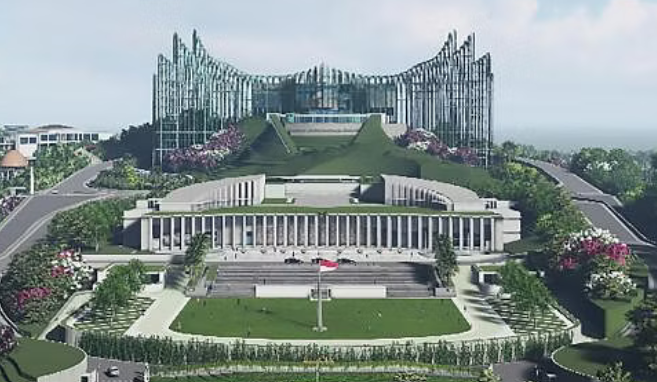
Indonesia’s new capital: Nusantara
A Pressure Valve, Not a Population Transfer
The relocation, experts say, should be understood less as a mass migration and more as a pressure valve.
Jakarta’s population may stabilize or slowly decline over the long term if administrative functions and future growth shift elsewhere. But the city will remain Indonesia’s economic heart for the foreseeable future. Manufacturing, finance, ports and informal economies cannot simply be relocated inland.
The result is a dual reality: Jakarta as a megacity under strain, and Nusantara as an unfinished promise.
The Bigger Question Facing Megacities
The United Nations describes this moment as a global test of governance. Jakarta’s rise — alongside Dhaka and Cairo — reflects a world in which cities grow faster than infrastructure, planning and environmental resilience.
Megacities concentrate opportunity and risk in equal measure. They generate growth, innovation and culture, while also magnifying inequality, climate exposure and political pressure.
Jakarta’s future now hinges on two timelines: how quickly Nusantara can become a functioning city — and how long Jakarta can remain livable.
The world’s largest city, it turns out, may also be one of its most fragile. (zai)