
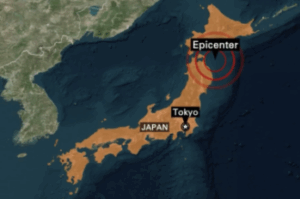
TOKYO — A magnitude 6.6 earthquake struck southwest Japan early Monday, prompting a swift tsunami advisory from the Japan Meteorological Agency (JMA). Though the alert was later cancelled, the quake rattled coastal communities and disrupted rail service, underscoring persistent seismic risks in the region.
Quake’s Impact, Advisory, and Aftermath
- The JMA first estimated the earthquake’s magnitude at 6.9, then revised it to 6.7 before finalizing the figure at 6.6 in an official statement. The revision underscores the difficulty of rapid assessments in the quake’s immediate aftermath.
- The advisory urged residents to stay clear of coastal zones — a precaution later lifted when tsunami threats subsided. No significant property damage or widespread destruction was reported in the quake’s wake.
- Despite the relatively modest magnitude, some residents were evacuated from coastal towns as a safety measure. In southwestern Japan’s Kyushu region, one man sustained a minor injury after falling down stairs, according to a report from national broadcaster NHK. Meanwhile, rail services were disrupted when trains at Miyazaki Station stopped, leaving some passengers temporarily stranded.
- A small tsunami waves reached parts of the coast shortly after the quake, NHK reported. At Miyazaki Port, water levels rose about 8 inches, while other coastal areas saw waves as high as 3.2 feet, arriving less than 30 minutes post-quake. The waters receded without inflicting reported damage.

Government — and What It Means for Visitors
In light of today’s events, the Japanese government — through the JMA and local disaster-management offices — reaffirmed its standard public-safety guidelines: residents and visitors should steer clear of coastlines until advisories are lifted, and follow instructions from municipal authorities.
For travelers currently in Japan or planning a visit — especially to southern or coastal prefectures — the advice remains unchanged:
- Stay alert for emergency alerts on local news networks (like NHK) or official channels.
- Avoid beaches, harbors, and other shorelines until local authorities declare it safe.
- In the unlikely event of renewed seismic activity, be prepared to evacuate: know your hotel’s emergency plan, and keep alternative transportation in mind.
- For planned travel to potentially affected areas such as Kyushu or Miyazaki prefecture, consider adding flexibility to your itinerary: occasional rail delays or short-term closures of coastal spots can occur.
As of now, the government has not issued any broader travel warnings or restrictions for tourists. The swift cancellation of the tsunami advisory and absence of major damage mean that travel across Japan remains safe and largely unaffected — though visitors should remain conscious of the country’s ever-present seismic activity.
A Reminder of Japan’s Seismic Realities
Japan sits atop several active tectonic plates — a fact that makes earthquakes a regular part of life across the archipelago. Even a moderate quake like today’s serves as a reminder of the importance of disaster readiness: monitoring alerts, knowing local evacuation routes, and staying away from vulnerable coastal zones in the hours after a quake.
For now, authorities say the situation is stable, and tourists need not change their broader travel plans — but staying aware and cautious is the prudent approach. (zai)
Map: CNN